
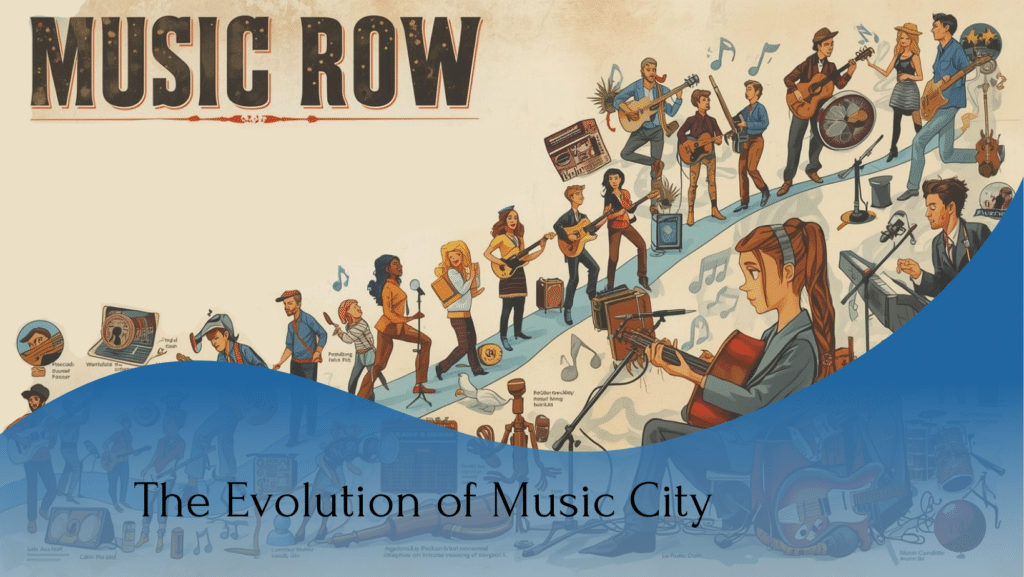
Tucked just southwest of downtown Nashville sits a neighborhood that quietly changed the sound of the world. Music Row may look unassuming at first glance—tree-lined streets, converted homes, and modest studio signs—but behind those doors, countless chart-topping songs and genre-defining careers were born.
To understand Nashville’s rise as a global music capital, you have to understand the evolution of Music Row: how it began, how it adapted, and how its legacy continues today through both memory and modern innovation.
The Birth of Music Row
Music Row began taking shape in the 1950s and 1960s, when Nashville’s growing recording industry started converting Victorian homes and small offices into studios, publishing houses, and record labels. What made Music Row unique wasn’t flashy buildings—it was proximity. Songwriters, producers, musicians, and executives all worked within walking distance of one another, creating a collaborative ecosystem unlike anywhere else.
This close-knit setup fueled the development of what became known as the “Nashville Sound,” a smoother, more polished style of country music that helped artists cross over into mainstream popularity. Studios like RCA Studio B, Quonset Hut, and Columbia Studio A became creative powerhouses, producing recordings that would define generations.
Where the Hits Were Made
Some of the most iconic recordings in music history were created on Music Row. Elvis Presley recorded more than 200 songs at RCA Studio B. Dolly Parton, Willie Nelson, Patsy Cline, Roy Orbison, and countless others laid down tracks that are still played worldwide today.
These studios weren’t just places to record—they were spaces of experimentation and trust. Musicians often recorded live together in one room, feeding off each other’s energy. Producers like Chet Atkins and Owen Bradley helped shape performances that balanced artistry with commercial appeal, solidifying Nashville’s reputation as a city where songs were crafted with care.
Preserving the Stories: Oral Histories of Music Row
As Nashville continues to grow and modernize, there has been an increasing effort to preserve the stories of those who built Music Row from the ground up. One of the most significant recent projects is the Music Row Oral History Initiative led by the Nashville Public Library.
This project captures firsthand accounts from songwriters, studio engineers, producers, and industry leaders who lived and worked during Music Row’s most transformative decades. These interviews preserve not just dates and credits, but personal memories—late-night sessions, career-changing phone calls, and the collaborative spirit that defined the neighborhood.
For visitors and music lovers, these oral histories add a crucial human layer to Music Row’s legacy. They remind us that behind every hit song was a group of people taking creative risks, often without knowing they were making history.
Music Row Today: A Living, Working Industry
While Music Row honors its past, it is far from frozen in time. Today, the neighborhood remains a working hub of the Music City music industry, housing modern recording studios, publishing companies, management offices, and creative agencies.
Artists from country, pop, rock, Americana, and even hip-hop continue to record on Music Row, proving its adaptability across genres. New technologies have changed how music is produced, but the Row’s collaborative DNA remains intact. Songwriting rooms still buzz with creativity, and studios still chase that elusive “magic take.”
At the same time, preservation efforts have become increasingly important as development pressures grow. Many Nashville locals and industry advocates continue to fight for the protection of historic studios and buildings, recognizing that Music Row’s physical spaces are inseparable from its cultural impact.
Why Music Row Matters to Nashville and the World
Music Row tells a broader story about Nashville itself: a city built on creativity, collaboration, and constant reinvention. It bridges the gap between past and present, reminding us that today’s hits are rooted in decades of experimentation and craftsmanship.
For visitors, walking or driving through Music Row offers a rare opportunity to stand where legends stood—to see where songs that crossed oceans and cultures first came to life. It’s not a museum district; it’s a living chapter of music history still being written.
Experience Music Row with Nashville Experience Tours
At Nashville Experience Tours, we don’t just point out buildings we tell the stories that happened inside them. Our Music Row tours connect visitors to the people, recordings, and moments that shaped Nashville into Music City, blending historic insight with modern relevance.
From iconic studios to behind-the-scenes industry stories, we help you experience Music Row as more than a neighborhood- it’s the creative engine that put Nashville on the global stage.