
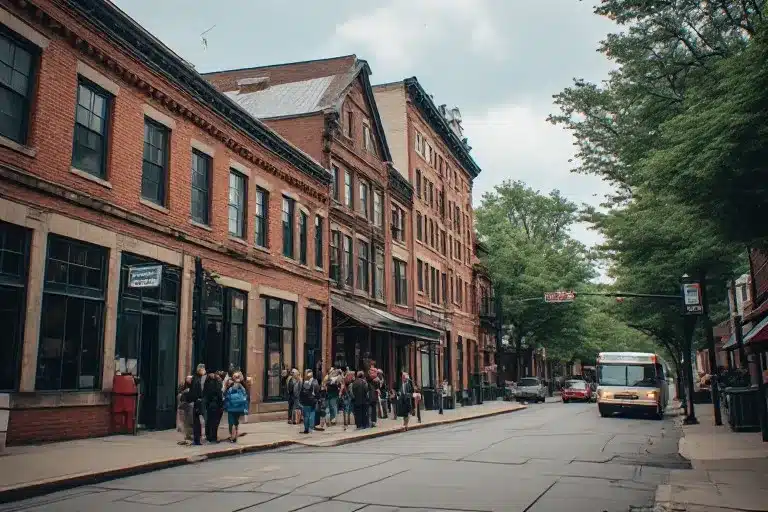
Nashville’s historic parks offer more than open lawns, walking paths, and places to relax. Across the city, public green spaces preserve connections to Tennessee history, major events, monuments, architecture, neighborhoods, and communities that helped shape modern Nashville.
For travelers interested in Tennessee walking tours, these parks provide an accessible way to combine sightseeing with local history. From the iconic Parthenon at Centennial Park to Civil War sites, riverfront spaces, historic squares, and neighborhood parks, Nashville’s green spaces reveal stories that are easy to miss when visitors focus only on Broadway and Music Row.
Why Explore Nashville’s Historic Parks?
Parks provide a different way to experience Nashville.
Museums and historic buildings preserve history indoors, while parks allow visitors to experience landscapes, monuments, architecture, and historic locations within the broader city environment.
Many are also easy to combine with other Nashville attractions.
History Is Often Hidden in the Landscape
A modern park may look completely different from the land that occupied the same location generations ago.
Some Nashville parks have connections with military history, transportation, major exhibitions, former neighborhoods, civic development, or important public events.
Understanding what happened on the land before it became a park can completely change the experience of walking through it.
Centennial Park
Centennial Park is one of Nashville’s most recognizable public spaces.
Located west of downtown, the park is best known for the Parthenon, but its history extends well beyond this famous landmark.
The area became particularly significant during the Tennessee Centennial and International Exposition held in 1897.
The Tennessee Centennial Exposition
The exposition celebrated Tennessee’s centennial of statehood and transformed the grounds with elaborate temporary buildings, exhibits, entertainment, and attractions.
Thousands of visitors came to experience the event.
Most exposition structures disappeared afterward, but the Parthenon became the enduring symbol of the site.
The Parthenon
The Parthenon is a full-scale representation of the ancient Greek temple in Athens.
Its presence reflects Nashville’s historical association with education and the city’s longstanding nickname, the “Athens of the South.”
Today, it remains one of Nashville’s most distinctive architectural landmarks.
Look Beyond the Exterior
Visitors often photograph the Parthenon and move on.
However, understanding why the structure exists provides much richer context.
Its relationship with the 1897 exposition connects the building with Nashville’s civic ambitions, educational identity, and efforts to present itself to a wider audience during the late nineteenth century.
Bicentennial Capitol Mall State Park
Bicentennial Capitol Mall State Park provides an opportunity to explore Tennessee history within walking distance of the State Capitol.
The park incorporates monuments, geographic features, historical information, and design elements related to Tennessee.
It is particularly useful for visitors who want to combine walking with broader state history.
Explore Tennessee Through the Park’s Design
The park was designed to communicate information about Tennessee’s geography and history.
Rather than functioning solely as recreational space, it incorporates educational elements throughout the landscape.
Visitors can therefore learn while moving through the park instead of following a conventional indoor museum route.
Connect the Park With the Tennessee State Capitol
One advantage of Bicentennial Capitol Mall is its proximity to the Tennessee State Capitol.
Combining the two locations creates a natural historical route.
Visitors can explore state history at ground level before viewing the Capitol and surrounding government district.
Nashville Is Tennessee’s Capital
Music often dominates Nashville’s visitor identity, but the city is also the center of Tennessee state government.
Exploring the Capitol area helps travelers understand Nashville’s political importance and provides a useful counterpoint to entertainment-focused sightseeing.
Public Square Park
Public Square Park occupies an important location in Downtown Nashville.
The surrounding area has long been connected with civic activity, government, commerce, and the development of the city.
Modern visitors encounter a landscaped public space surrounded by contemporary downtown buildings, but the location has much deeper historical roots.
Public Squares Were Central to Early Cities
Public squares traditionally served practical and civic purposes.
They could provide locations for government, markets, gatherings, commerce, and public activity.
Understanding the role of these spaces helps visitors visualize how Nashville functioned before automobiles, skyscrapers, and modern entertainment districts transformed downtown.
Cumberland Park
Cumberland Park sits along Nashville’s riverfront and provides a useful location for considering the city’s relationship with the Cumberland River.
The modern recreational space offers views toward downtown while connecting visitors with one of the geographic features most responsible for Nashville’s original development.
The Cumberland River Helped Build Nashville
The river provided transportation and commercial connections long before modern highways and airports existed.
Goods, people, and information moved through Nashville using river transportation.
The city’s downtown commercial district developed in close relationship with this waterway.
Walking near the river can therefore help visitors understand why Nashville developed where it did.
Riverfront Park
Riverfront Park provides another opportunity to experience Nashville’s historic relationship with the Cumberland River.
Its location near Lower Broadway makes it easy to incorporate into downtown sightseeing.
Visitors can move from the city’s modern entertainment district toward the river and consider how different the area functioned during earlier periods.
Broadway Makes More Sense From the Riverfront
Lower Broadway’s geography becomes clearer when viewed in relation to the Cumberland River.
Historic downtown businesses depended on transportation, commerce, warehouses, and movement between the waterfront and the city’s interior.
The riverfront provides useful context for understanding why Nashville’s early commercial core developed nearby.
Fort Negley Park
Fort Negley is one of Nashville’s most significant Civil War sites.
Union forces constructed the fort after occupying Nashville in 1862.
Its elevated location was strategically important within the system of defenses established around the city.
Nashville Became a Major Union Stronghold
Nashville’s capture early in the Civil War made the city an important military and logistical center.
Its transportation infrastructure, including railroads and the Cumberland River, increased its strategic value.
Fortifications were constructed to protect the occupied city and its supply networks.
The Labor Behind Fort Negley
Understanding Fort Negley requires more than examining military strategy.
African Americans, including people who had escaped slavery, were compelled or recruited to perform difficult labor connected with the construction of Nashville’s defenses.
Their experiences are an essential part of the site’s history.
Civil War Sites Include Civilian Stories
Battlefields and forts are often interpreted primarily through generals and soldiers.
However, military infrastructure depended heavily on labor.
Examining who constructed fortifications and under what circumstances creates a more complete understanding of Nashville during the Civil War.
Fort Negley’s Landscape Tells Part of the Story
The elevated terrain surrounding Fort Negley helps explain why the location was strategically valuable.
Walking through the site allows visitors to experience geography in a way that maps and photographs cannot fully communicate.
Terrain Matters in Military History
Elevation, transportation routes, waterways, and approaches to a city influence military planning.
When exploring Fort Negley, consider what nineteenth-century military planners could observe from the area and why controlling elevated ground mattered.
This makes the landscape itself part of the historical interpretation.
Sevier Park
Sevier Park provides a neighborhood-focused experience in the 12 South area.
The park surrounds the historic Sunnyside property and offers a combination of green space, community activity, and connections with Nashville’s past.
Its setting provides a contrast with downtown civic parks.
Historic Homes Can Anchor Public Spaces
Sunnyside adds an architectural and historical element to the park.
Historic residences can help visitors understand how areas that are now urban neighborhoods once looked and functioned differently.
The relationship between the house, surrounding land, and modern neighborhood demonstrates how Nashville expanded over generations.
Fannie Mae Dees Park
Fannie Mae Dees Park is a recognizable neighborhood park near Vanderbilt University.
It is often known locally for its large mosaic dragon sculpture, which has become one of the park’s most distinctive visual features.
The park demonstrates how community spaces can develop their own local identities.
Neighborhood Parks Reveal Everyday Nashville
Not every worthwhile Nashville park needs to contain a nationally significant monument.
Neighborhood parks provide insight into how residents use public space.
For visitors, these locations can offer a quieter perspective on the city outside major tourism districts.
Hadley Park
Hadley Park is historically significant within Nashville’s African American community.
The park has long served as an important recreational and community space in North Nashville.
Exploring its history can add another dimension to a visitor’s understanding of public recreation, segregation, and Black community life in the city.
Parks Can Reflect Social History
Public spaces do not exist outside social conditions.
Access to parks, recreational facilities, pools, sports programs, and public amenities has historically been affected by segregation and inequality.
Examining these issues helps visitors understand Nashville’s parks as social institutions rather than simply landscaped spaces.
North Nashville’s History Extends Beyond Individual Landmarks
Hadley Park can be considered within the broader historical landscape of North Nashville.
The area includes important educational institutions, churches, neighborhoods, businesses, and locations connected with African American history.
Connect Parks With Their Communities
A park becomes more meaningful when visitors understand the neighborhood surrounding it.
Consider who historically used the space, what institutions were nearby, and how the community changed.
This approach turns park exploration into neighborhood history.
Warner Parks
Edwin Warner Park and Percy Warner Park form one of Nashville’s largest and most significant park systems.
The parks provide extensive natural landscapes, trails, scenic areas, and recreational opportunities.
They also demonstrate the role large public park systems play in preserving land within a growing metropolitan area.
Green Space Preserves More Than Recreation
Large parks can protect landscapes from intensive development.
As cities expand, preserved land provides ecological, recreational, and cultural value.
Walking through Warner Parks offers a dramatically different experience from exploring Nashville’s dense downtown streets.
Percy Warner Park
Percy Warner Park is particularly recognizable for its stone entrance and extensive trail network.
Its landscape offers opportunities for walking, hiking, observing nature, and experiencing a quieter side of Nashville.
Historic Park Design Adds Character
Park infrastructure can become historically interesting in its own right.
Stonework, roads, paths, entrances, bridges, and landscaping reflect earlier approaches to public recreation and park development.
Visitors interested in architecture and landscape history should pay attention to these smaller details.
Edwin Warner Park
Edwin Warner Park complements neighboring Percy Warner Park with additional trails and natural areas.
Together, the parks provide substantial recreational space within the Nashville metropolitan area.
Combine History With Outdoor Activity
Not every historical experience requires standing beside a monument.
Walking through preserved landscapes can help visitors understand Nashville’s geography and development while providing a break from crowded attractions.
For travelers interested in Tennessee walking tours, this combination can be particularly appealing.
Shelby Bottoms and Shelby Park
Shelby Park and the adjacent Shelby Bottoms Greenway provide extensive recreational opportunities in East Nashville.
The area includes trails, open spaces, natural environments, and connections with the Cumberland River.
Explore Nashville’s Natural Landscape
Modern urban development can make it difficult to imagine the natural environments that existed before neighborhoods, roads, and commercial districts expanded.
Greenways and riverfront parks preserve portions of that landscape and provide opportunities to consider Nashville’s environmental history.
Nashville’s Parks and the Cumberland River
Several Nashville parks are directly connected with the Cumberland River or its surrounding landscape.
This relationship matters historically because the river played such an important role in transportation, settlement, commerce, industry, and urban development.
Follow the River to Understand Nashville
Visitors exploring Nashville history should repeatedly consider the Cumberland River.
Ask how people crossed it, transported goods along it, built businesses near it, and responded to flooding.
The river provides one of the strongest geographic threads connecting different periods of Nashville history.
Parks Can Preserve Lost History
One of the most interesting characteristics of urban parks is that the modern landscape may conceal earlier uses.
Land may previously have contained homes, farms, industrial facilities, military infrastructure, transportation routes, or other features.
Ask What Was Here Before
When exploring a historic park, consider:
- What occupied this land previously?
- Why did it become a park?
- Who created the park?
- Which communities used it?
- Have its boundaries changed?
- Are historic buildings still present?
- Did major events occur nearby?
- How has the surrounding neighborhood changed?
These questions can reveal stories that are not immediately visible.
Monuments and Markers Require Context
Historic parks frequently contain monuments, plaques, statues, and interpretive signs.
These features can provide useful information, but visitors should remember that monuments also reflect the era in which they were created.
Ask Why a Monument Was Installed
A monument tells at least two stories.
One concerns the person or event being commemorated.
The other concerns the people who decided to create the monument, the historical period when it was installed, and the message they wanted the public to remember.
Considering both perspectives leads to stronger historical interpretation.
Historic Parks Are Useful for Photography
Nashville’s parks offer opportunities to photograph landscapes, monuments, architecture, skylines, gardens, trails, and historic features.
Centennial Park and the Parthenon are particularly recognizable, while riverfront parks can provide views of downtown.
Photograph Details, Not Just Landmarks
Look beyond wide photographs.
Architectural details, inscriptions, stonework, pathways, historic markers, trees, bridges, and landscape features can create a more complete visual record.
Photographs can also help visitors compare different park environments later.
Walking Is One of the Best Ways to Explore Parks
Historic parks reward slower exploration.
Walking allows visitors to notice features that are easy to miss from a vehicle, including plaques, architectural details, terrain changes, monuments, and connections between different parts of a site.
Plan for Nashville Weather
Nashville experiences hot and humid summer conditions as well as seasonal rain and cooler winter weather.
Before exploring outdoor sites, check current conditions and prepare appropriately.
Comfortable footwear, water, sun protection, and weather-appropriate clothing can make longer walks more enjoyable.
Accessibility Varies by Park
Not every historic landscape has identical accessibility.
Terrain, older pathways, hills, natural surfaces, stairs, and historic infrastructure may affect mobility.
Visitors with specific accessibility requirements should review current information before arriving.
Choose Routes Based on Your Group
Families, seniors, young children, and visitors with mobility limitations may prefer different routes.
A shorter paved route may provide a better experience than attempting to cover every section of a large park.
The goal should be meaningful exploration rather than maximum distance.
Combine Parks With Nearby Attractions
One of the most efficient ways to explore Nashville is to group attractions geographically.
Centennial Park can be combined with West End and nearby educational areas. Bicentennial Capitol Mall can be paired with the Tennessee State Capitol. Riverfront parks can complement Downtown Nashville sightseeing.
Geographic Planning Saves Time
Nashville attractions can be more spread out than first-time visitors expect.
Grouping destinations reduces unnecessary transportation and leaves more time for exploration.
This is especially useful when combining walking with vehicle-based sightseeing.
Tennessee Walking Tours Add Historical Context
Visitors can explore many Nashville parks independently, but guided experiences can provide historical context that is difficult to obtain simply by walking through the landscape.
A guide can explain why a park exists, what previously occupied the land, how surrounding neighborhoods developed, and which historical events occurred nearby.
Walking Makes History More Tangible
Standing on the actual landscape where events occurred creates a different experience from reading about them elsewhere.
Visitors can see distances, elevations, buildings, roads, rivers, and surrounding neighborhoods directly.
This physical context is one of the major advantages of Tennessee walking tours.
Build a Historic Park Itinerary
Visitors interested primarily in history can combine several parks into a broader Nashville itinerary.
The exact route should depend on available time, transportation, weather, and personal interests.
A Balanced Park Experience
Consider combining:
- Centennial Park
- The Parthenon
- Bicentennial Capitol Mall State Park
- Tennessee State Capitol area
- Fort Negley
- Riverfront Park
- Cumberland Park
- Sevier Park
- Hadley Park
- Warner Parks
Each location provides a different perspective on Nashville.
Frequently Asked Questions
What are the best historic parks to visit in Nashville?
Centennial Park, Bicentennial Capitol Mall State Park, Fort Negley, Riverfront Park, Cumberland Park, and several neighborhood parks offer useful combinations of history, recreation, landmarks, and local context.
Which Nashville park has the Parthenon?
The Parthenon is located in Centennial Park. The site is connected with the Tennessee Centennial and International Exposition of 1897.
Which Nashville park is best for Civil War history?
Fort Negley is one of Nashville’s most important locations for exploring Civil War history. The site provides context about Union occupation, military defenses, and the African American labor involved in constructing the fortifications.
Are Nashville’s historic parks free to visit?
Many public parks can generally be entered without admission, although individual attractions, museums, programs, parking facilities, or special events may have separate fees. Check current information before visiting.
Can I explore Nashville’s historic parks on foot?
Yes. Many parks contain walking paths or areas suitable for pedestrian exploration. Conditions and accessibility vary, so visitors should choose routes appropriate for their needs.
Are Tennessee walking tours good for history lovers?
Walking tours can be particularly useful for history-focused visitors because they connect stories with the actual streets, landscapes, architecture, monuments, and locations where Nashville’s history developed.
Nashville’s historic parks demonstrate that local history is not confined to museums and preserved buildings. It can be found in landscapes, riverfronts, military sites, monuments, neighborhood spaces, architectural landmarks, and the changing geography of the city.
Exploring these locations through Tennessee walking tours can connect recreation with a deeper understanding of Nashville and Tennessee history. By slowing down and examining the landscapes around them, visitors can discover stories that are easily missed when traveling from one major attraction to another.