
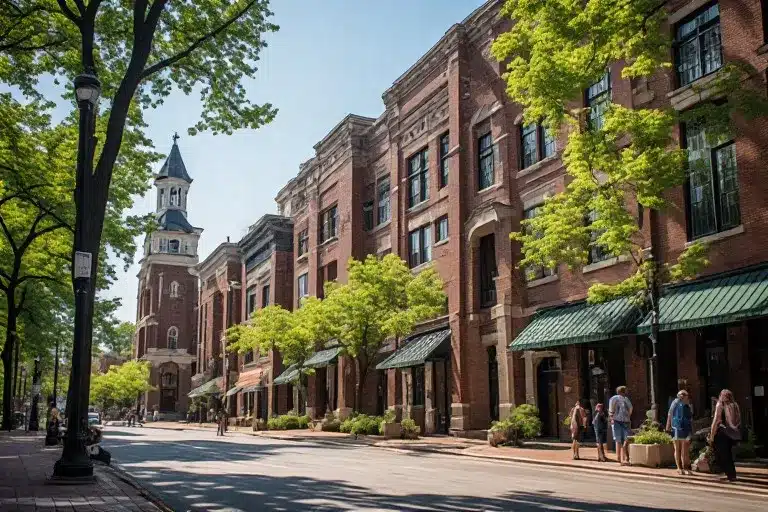
Nashville is one of those cities where interesting photographs appear around almost every corner. Historic commercial buildings stand beside modern towers, colorful murals transform neighborhood walls, live music spills onto downtown streets, and the Cumberland River creates opportunities for skyline and bridge photography.
A Nashville walking tour gives photographers an advantage because exploring on foot allows you to slow down, change perspectives, notice architectural details, and discover scenes that are easy to miss from a vehicle. Whether you are using a professional camera or simply documenting your trip with a phone, Nashville offers plenty of opportunities to capture Music City’s character.
Why Explore Nashville Photography Spots on Foot?
Walking gives you more control over how you photograph a city.
Instead of viewing landmarks through a vehicle window, you can stop, adjust your position, wait for pedestrians to move, experiment with different angles, and examine smaller details.
Walking Helps You Notice More
Some of Nashville’s most interesting photographs are not necessarily its biggest attractions.
While walking, you may notice:
- Historic signs
- Decorative brickwork
- Old windows and doors
- Murals
- Alleyways
- Street musicians
- Reflections
- Architectural details
- River views
- Contrasts between historic and modern buildings
These smaller scenes can provide a more complete visual record of Nashville.
Lower Broadway
Lower Broadway is one of Nashville’s most recognizable photography locations.
The street combines historic commercial architecture with honky-tonks, neon signs, live music venues, rooftop spaces, crowds, and modern entertainment businesses.
Its appearance also changes considerably depending on the time of day.
Photograph Broadway During the Day
Daytime photography makes it easier to concentrate on architecture.
Look above the modern storefronts and signs. Upper floors often reveal older brickwork, windows, cornices, and other features that tell a different story from the entertainment businesses operating below.
Photograph Broadway After Dark
Evening brings a completely different visual atmosphere.
Illuminated signs, venue lights, traffic, crowds, and reflections create opportunities for more energetic city photographs.
When taking pictures at night, remain aware of pedestrians and traffic rather than concentrating exclusively on your screen or camera.
The Ryman Auditorium
The Ryman Auditorium is one of Nashville’s most important music landmarks and a natural photography stop during a downtown walk.
Its distinctive exterior provides opportunities for both wide photographs and closer architectural compositions.
Capture the Details
Do not photograph only the entire building.
Look for doors, windows, brickwork, signs, and other details that communicate the building’s character.
Including surrounding streets in some photographs can also show how the Ryman fits into modern Downtown Nashville.
Second Avenue
Second Avenue provides another strong location for photographers interested in Nashville’s historic commercial architecture.
The street’s relationship with the Cumberland River and downtown business history makes it especially relevant for visitors who want photographs that go beyond Nashville’s music image.
Photograph the Streetscape
Individual buildings are interesting, but groups of historic buildings can tell a larger visual story.
Experiment with compositions that show several facades together.
This can highlight differences in height, materials, windows, storefronts, and architectural details.
Printer’s Alley
Printer’s Alley offers a very different photographic environment.
Its narrower scale, signs, buildings, and entertainment history give it a character distinct from larger downtown streets.
Use the Alley for Tighter Compositions
Alleys naturally create strong lines and visual depth.
Try photographing along the length of the alley rather than only individual storefronts.
Doors, signs, fire escapes, lighting, brickwork, and other smaller features can also create interesting compositions.
The Cumberland Riverfront
The Cumberland River provides one of the most important geographic perspectives on Nashville.
Walking toward the river allows photographers to move away from tightly packed downtown buildings and create wider compositions involving water, bridges, skyline elements, and public spaces.
Use the River as Part of the Composition
Water can add reflections, open space, and visual separation.
Instead of treating the river simply as the foreground, experiment with positioning bridges, buildings, and skyline elements around it.
Weather and lighting conditions can dramatically change the result.
The John Seigenthaler Pedestrian Bridge
The John Seigenthaler Pedestrian Bridge is a popular location for broad views of Nashville’s downtown skyline.
Its elevated position can provide a different perspective from photographs taken at street level.
Try Multiple Directions
Do not focus exclusively on one skyline view.
Turn around periodically and examine the river, surrounding bridges, stadium area, and different parts of the city.
Changing your direction by only a few degrees can produce a substantially different photograph.
Nashville’s Skyline
Nashville’s skyline provides a visual record of the city’s growth.
Modern towers contrast with older buildings, churches, entertainment districts, and historic structures.
Include Old and New Nashville Together
Photographs become more interesting when they communicate change.
Look for opportunities to place a historic building in the foreground with modern development behind it.
This creates an image that says something about Nashville rather than simply documenting one building.
Downtown Presbyterian Church
Downtown Presbyterian Church is particularly interesting for architectural photography because of its Egyptian Revival design.
The building differs significantly from what many visitors expect a historic American church to look like.
Focus on Architectural Features
Columns, decorative details, entrances, windows, and geometric forms can all become subjects.
Architectural photography does not always require fitting the entire building into the frame.
Sometimes a carefully selected detail produces the stronger image.
Tennessee State Capitol
The Tennessee State Capitol provides another major architectural landmark for photographers.
Its elevated location and surrounding civic environment create several opportunities for wider compositions.
Photograph the Capitol From Different Distances
A close photograph emphasizes architecture.
A more distant composition can show how the Capitol relates to Nashville’s terrain, surrounding buildings, and public spaces.
Using both approaches creates a more complete visual story.
Bicentennial Capitol Mall State Park
Bicentennial Capitol Mall State Park provides a mixture of open space, monuments, Tennessee-themed features, and views toward the Capitol area.
It can provide a welcome photographic contrast after exploring dense downtown streets.
Use Open Space Creatively
Parks allow more flexibility when composing photographs.
Experiment with pathways, landscaping, monuments, and distant architecture.
Leading lines created by walkways can help direct attention toward a subject.
Public Square
Nashville’s Public Square provides opportunities to photograph civic architecture, public space, downtown activity, and surrounding buildings.
It also connects with important chapters of Nashville’s history.
Include People for Scale
Architecture does not always need to be photographed without people.
Pedestrians can provide scale and communicate how public spaces function.
When photographing identifiable individuals closely, be respectful and consider whether permission is appropriate.
Nashville’s Historic Churches
Downtown Nashville contains several historic churches with distinctive architectural characteristics.
Their towers, stonework, brickwork, windows, entrances, and decorative features can provide useful subjects during a walking route.
Photograph Details as Well as Facades
Look for:
- Stained-glass windows
- Doors
- Stone carvings
- Towers
- Columns
- Brick patterns
- Decorative trim
- Historic plaques
These details help create variety within a collection of Nashville photographs.
Historic Downtown Architecture
One of the best photography habits in Downtown Nashville is simple: look up.
Modern businesses often occupy street-level spaces, while upper stories preserve more of a building’s historic appearance.
Look Above the Signs
You may find older windows, decorative cornices, dates, brick patterns, faded signs, and architectural ornamentation.
These details are particularly useful for visitors interested in documenting Nashville’s development rather than only its modern tourism industry.
Nashville’s Murals
Murals have become popular photography stops throughout Nashville.
They range from large, highly recognizable works to smaller pieces of neighborhood art.
Photograph the Artwork and Its Setting
A close photograph documents the mural itself.
A wider photograph can show how the artwork interacts with the surrounding building, sidewalk, neighborhood, and people.
Try both approaches.
12 South
The 12 South neighborhood is known for local businesses, residential streets, murals, and a walkable commercial corridor.
It offers a different photographic atmosphere from Downtown Nashville.
Capture Neighborhood Character
Instead of photographing only murals, look for combinations of storefronts, street scenes, houses, landscaping, and public spaces.
These images can communicate what the neighborhood actually feels like.
Sevier Park
Sevier Park can be incorporated into a 12 South photography route.
Green space provides visual variety after photographing buildings and commercial streets.
Use Natural Elements to Frame Images
Trees, pathways, and landscaping can create natural frames around buildings or people.
Changing seasons may also affect the park’s appearance, giving repeat visitors different photographic opportunities.
Music Row
Music Row is especially interesting because much of its importance is not immediately obvious from appearance alone.
The district has historically contained recording studios, publishers, labels, offices, and other businesses connected with Nashville’s music industry.
Photograph the Ordinary Buildings Behind Famous Music
Some historically important music-industry buildings can look surprisingly modest.
That contrast is part of Music Row’s visual story.
Photographs of houses converted into offices or studios can help document the physical environment in which Nashville’s music business developed.
RCA Studio B Area
RCA Studio B is closely associated with Nashville recording history and the development of the Nashville Sound.
Its significance makes the surrounding Music Row area particularly interesting for music-history photography.
Give Your Photographs Context
A photograph becomes more meaningful when you understand what you are documenting.
Learning the history of a studio, venue, or street before photographing it can influence which details you choose to emphasize.
Centennial Park
Centennial Park provides a completely different visual environment from downtown.
Open lawns, landscaping, paths, water features, and the Parthenon create numerous photographic possibilities.
Give Yourself Room to Experiment
Large open spaces allow you to move farther from your subject.
Try photographing from multiple distances instead of immediately choosing the most obvious viewpoint.
A few extra minutes of walking can produce a much stronger composition.
The Parthenon
The Parthenon is one of Nashville’s most distinctive architectural subjects.
Its columns, symmetry, scale, and classical design make it suitable for wide compositions as well as detail photography.
Use Symmetry Carefully
The building naturally lends itself to symmetrical compositions.
However, do not limit yourself to centered photographs.
Side angles, columns, stairs, shadows, and partial views can create more unusual images.
Fort Negley
Fort Negley provides opportunities to combine Nashville history with landscape photography.
Its elevated terrain can help visitors understand why the location was strategically important during the Civil War.
Photograph the Landscape, Not Only the Structure
Terrain is part of the site’s story.
Include surrounding views, elevation changes, pathways, stonework, and landscape features in your photographs.
This helps communicate why the location mattered historically.
Jefferson Street and North Nashville
North Nashville contains important connections with African American history, education, civil rights, music, and community development.
Jefferson Street in particular has a significant cultural and musical legacy.
Photograph With Historical Context
Photography of historic neighborhoods should go beyond treating them simply as visual backdrops.
Learning about the communities, institutions, and events connected with an area creates more meaningful images and encourages more respectful exploration.
East Nashville
East Nashville offers another opportunity to photograph residential architecture, neighborhood streets, local businesses, public art, and green spaces.
Its visual character differs considerably from Lower Broadway.
Look for Everyday Nashville
Travel photography does not always require famous landmarks.
Neighborhood storefronts, houses, sidewalks, signs, and public spaces can help document the city beyond its primary visitor attractions.
Reflections After Rain
Rain can create excellent photography conditions.
Wet pavement reflects signs, lights, buildings, vehicles, and pedestrians, particularly around Downtown Nashville.
Look Down as Well as Up
Photographers naturally look toward buildings and skylines.
After rain, pavement itself can become part of the composition.
Experiment with reflections while remaining safely out of vehicle traffic.
Morning Light in Nashville
Morning can provide useful conditions for architectural photography.
Some streets may also feel less visually crowded before the busiest parts of the sightseeing day.
Use Shadows as Part of the Image
Early light can create stronger directional shadows across buildings and streets.
Instead of avoiding shadows, consider using them to emphasize texture, depth, and architectural forms.
Golden Hour Photography
The period around sunrise or sunset can create warmer and softer light than the middle of the day.
Buildings, river views, and skyline scenes may look substantially different during these periods.
Arrive Before the Light You Want
Do not wait until the exact moment you hope to photograph.
Give yourself time to find a position, evaluate the scene, and test several compositions before conditions change.
Blue Hour and Evening Photography
After sunset, the sky can retain color while city lights become increasingly visible.
This transition can create particularly interesting skyline and downtown photographs.
Stabilize Your Camera When Needed
Lower light may require slower shutter speeds.
If you are using a camera, stabilization or a suitable support can help where permitted and practical.
Phone users can also benefit from keeping the device steady while using low-light modes.
Photograph Nashville’s Neon and Signs
Signs are an important part of Nashville’s visual identity, particularly around entertainment districts.
They can work as primary subjects or as elements within larger street scenes.
Avoid Photographing Every Sign the Same Way
Try different approaches.
Photograph one sign closely, several signs together, reflections in windows, or signs framed by historic architecture.
Variety creates a more interesting collection.
Include People in Street Photography
People can add movement, scale, and atmosphere to Nashville photographs.
Crowds on Broadway, pedestrians crossing downtown streets, and visitors exploring public spaces can help communicate the energy of the city.
Be Respectful
Avoid interfering with other people’s activities simply to create a photograph.
Be particularly thoughtful when photographing children, private moments, performers at close range, or individuals who clearly do not want to be photographed.
Photograph Street Performers Respectfully
Music is part of Nashville’s street-level atmosphere.
If you photograph a performer, avoid blocking pedestrian traffic or disrupting the performance.
Consider Supporting Performers
When a street performer is providing the subject for your photographs or entertainment, consider supporting their work when appropriate.
Respect contributes to a better experience for both visitors and performers.
Use Your Phone Effectively
You do not need professional camera equipment to create memorable Nashville photographs.
Modern phones can handle landscapes, architecture, portraits, low-light scenes, and video surprisingly well.
Clean the Lens
One of the simplest photography improvements is also one of the most overlooked.
Phone lenses collect fingerprints and dust.
Cleaning the lens before taking important photographs can noticeably improve clarity.
Avoid Using Digital Zoom Excessively
Digital zoom can reduce image quality.
When safe and practical, physically moving closer or adjusting your composition may produce better results.
Take Both Wide and Detailed Photographs
A wide photograph establishes the location.
A close photograph records details.
Capturing both gives you more options when reviewing your trip later.
Use Leading Lines
Downtown streets, bridges, sidewalks, building edges, and pathways naturally create lines within photographs.
These can direct the viewer’s attention toward your main subject.
Nashville Streets Provide Natural Composition Tools
Printer’s Alley, the pedestrian bridge, riverfront paths, and rows of historic buildings can all provide strong visual lines.
Move around until those lines lead toward the subject rather than away from it.
Watch the Background
A strong subject can be weakened by a distracting background.
Before taking a photograph, check the entire frame.
Move a Few Steps
Sometimes the easiest improvement is simply changing your position.
Moving slightly left, right, forward, or backward can remove signs, poles, vehicles, or other distractions from behind your subject.
Avoid Blocking Sidewalks
Photography should not interfere with pedestrian movement.
Downtown Nashville can become extremely busy, especially around Broadway and major events.
Step Aside Before Stopping
If you need time to compose an image or adjust equipment, move toward a safe location away from the main pedestrian flow.
Never step into traffic for a photograph.
Pay Attention at Intersections
It is easy to become distracted when you are looking at a screen or through a camera.
Street photography requires awareness of your surroundings.
Take the Photograph From a Safe Position
Follow pedestrian signals and use designated crossings.
Do not remain in an intersection to finish a photograph after traffic signals change.
A missed photograph is preferable to an unsafe situation.
Travel Light on a Nashville Walking Tour
Heavy photography equipment can become uncomfortable during a long walking route.
Think realistically about which equipment you will actually use.
A Simple Photography Kit May Be Enough
Depending on your needs, consider:
- Camera or smartphone
- Spare battery or portable charger
- Memory card if required
- Lens cloth
- Compact rain protection
- Comfortable bag
- Water
- Only the lenses you expect to use
A lighter setup makes it easier to concentrate on the city.
Protect Camera Equipment From Weather
Nashville weather can change during a sightseeing day.
Rain, heat, humidity, and cold can affect both comfort and equipment.
Carry Basic Weather Protection
A protective camera bag or simple rain cover can be useful when showers are possible.
Avoid exposing sensitive equipment unnecessarily during heavy rain.
Plan a Photography Route by Area
Trying to photograph locations scattered across Nashville entirely on foot can waste time.
A more efficient approach is to choose one area and explore it thoroughly.
Downtown Photography Route
A downtown-focused route might connect:
- Lower Broadway
- Ryman Auditorium
- Second Avenue
- Printer’s Alley
- Public Square
- Historic churches
- Cumberland Riverfront
- John Seigenthaler Pedestrian Bridge
The exact route should be adjusted for current conditions, construction, events, and your available time.
Create a Separate Neighborhood Photography Route
Locations such as Music Row, 12 South, Centennial Park, and East Nashville are better treated as separate areas rather than extensions of one continuous downtown walk.
Transportation between districts can save time and energy.
Walk Once You Reach the Area
Using transportation between neighborhoods and then exploring each district on foot combines efficiency with the photographic advantages of walking.
This approach is particularly useful for visitors with limited time.
A Guided Walking Tour Adds Context to Your Photos
Independent photography gives you freedom, but a guided experience can explain why certain buildings, streets, and landmarks matter.
That historical context can change what you choose to photograph.
Stories Make Photographs More Meaningful
A picture of an old building becomes more interesting when you know who used it, what happened there, and how it fits into Nashville’s development.
A Nashville walking tour can connect individual photography locations with the broader history of Music City.
Frequently Asked Questions
What are some good photography spots in Downtown Nashville?
Lower Broadway, the Ryman Auditorium area, Second Avenue, Printer’s Alley, the Cumberland Riverfront, historic churches, Public Square, and the John Seigenthaler Pedestrian Bridge can provide a variety of downtown photography opportunities.
Where can I photograph the Nashville skyline?
The Cumberland River area and John Seigenthaler Pedestrian Bridge provide opportunities for broad downtown views. Your exact perspective will vary depending on where you stand along the route.
Where can I photograph Nashville murals?
Murals can be found in several Nashville neighborhoods, including areas outside the downtown core. Because public art can change over time, check current locations before planning a route around a specific mural.
What is the best time to photograph Nashville?
The ideal time depends on the type of photograph you want. Morning can work well for architecture, golden hour can provide warmer light, and evening is useful for photographing Nashville’s illuminated entertainment districts.
Do I need a professional camera for a Nashville photography walk?
No. A smartphone can be sufficient for travel photography. Composition, lighting, timing, and choosing an interesting viewpoint can matter more than having expensive equipment.
Can I take photographs during a Nashville walking tour?
Photography is generally possible in public outdoor areas, but individual attractions, venues, tours, and private properties may have their own rules. Follow posted restrictions and instructions from your guide.
Nashville rewards photographers who take time to look beyond the most obvious landmarks. Historic facades, alleyways, river views, music venues, murals, neighborhood streets, architectural details, and the contrast between old and new Nashville can all become memorable subjects.
Exploring these locations through a Nashville walking tour gives you time to observe those details and understand the stories behind them. Instead of returning home with photographs of only the city’s most famous attractions, you can build a visual record that captures more of Nashville’s history, atmosphere, and street-level character.