
Architecture Highlights Around Downtown Nashville
Nashville may be known as Music City, but its history is written in more than song lyrics. Look beyond the neon lights of Broadway, and you’ll find another side of the city hiding in plain sight: stunning architecture, historic landmarks, intricate stonework, and buildings that have witnessed generations of Nashville’s growth.
From grand Victorian structures to preserved nineteenth-century storefronts, downtown Nashville offers an architectural journey through the city’s past. Some buildings are instantly recognizable, while others are easily overlooked unless you know where to look.
Whether you’re exploring on your own or joining one of the many downtown Nashville tours, these architectural highlights offer a fascinating perspective on the city beyond its famous music scene.
1. Ryman Auditorium: Where History Meets Music
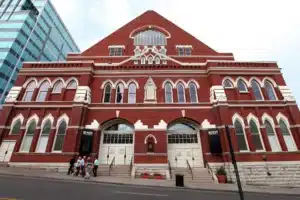
Few buildings represent Nashville’s identity quite like the historic Ryman Auditorium.
Completed in 1892, the building originally opened as the Union Gospel Tabernacle, a gathering place for religious services and community events. It later became the home of the Grand Ole Opry from 1943 to 1974, helping establish Nashville as a major destination for country music.
Architecturally, the Ryman stands out for its red brick exterior, distinctive arched windows, and historic auditorium design.
Unlike modern concert venues, the Ryman reflects an era when gathering spaces were designed with both grandeur and community in mind.
What to look for: The arched windows, brick detailing, and original tabernacle character that distinguish the building from Nashville’s modern entertainment venues.
2. Union Station: A Grand Welcome to Nashville
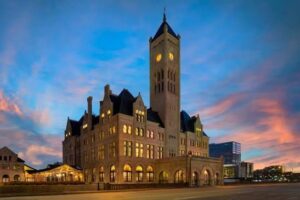
Before Nashville became a major tourism destination, travelers arrived by railroad. One of the city’s most impressive reminders of that era is Union Station Nashville Yards.
Opened in 1900, this former passenger railroad terminal features Romanesque Revival architecture, a prominent clock tower, dramatic stonework, and grand interior spaces.
The building was designed to make an impression on visitors arriving in Nashville, and more than a century later, it still does.
Today, Union Station operates as a hotel, demonstrating how historic architecture can be preserved and adapted for modern use.
What to look for: The clock tower, heavy masonry, arched openings, and architectural details that reflect the golden age of railroad travel.
3. The Downtown Presbyterian Church: An Unexpected Egyptian Influence
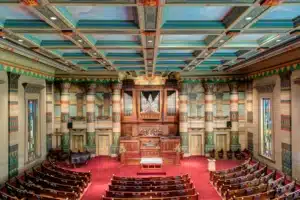
Not every historic building in Nashville follows the architectural traditions you might expect.
The Downtown Presbyterian Church is particularly distinctive because of its Egyptian Revival design.
Completed in the nineteenth century, the church features architectural elements inspired by ancient Egyptian structures, including massive columns and unusual decorative details.
Its appearance is dramatically different from the nearby commercial buildings and modern towers, making it one of downtown’s most interesting architectural surprises.
What to look for: Egyptian-inspired columns, ornamental details, and the contrast between the church’s historic facade and the surrounding skyline.
4. The Customs House: A Victorian Landmark
Located along Broadway, Nashville’s historic Customs House is an impressive example of nineteenth-century civic architecture.
Completed in 1877, the building features Victorian Gothic design elements, elaborate stonework, and a striking tower.
The building originally served federal government functions, including customs and postal operations.
Its carefully crafted details reflect an era when public buildings were designed to symbolize importance, stability, and civic pride.
What to look for: Pointed arches, decorative stone carvings, the tower, and the contrast between the building’s historic character and Broadway’s modern activity.
5. Second Avenue: Nashville’s Historic Commercial Architecture
Some of Nashville’s most interesting architecture isn’t found in a single landmark. It’s found along entire streets.
Historic Second Avenue developed as an important commercial district during the nineteenth century. Many buildings once served as warehouses, wholesale businesses, and storefronts connected to Nashville’s growing economy.
Today, surviving historic facades showcase brickwork, tall windows, and ornamental details associated with nineteenth-century commercial architecture.
Although portions of Second Avenue have undergone significant restoration following the 2020 bombing, the district remains an important part of Nashville’s architectural heritage.
What to look for: Decorative brickwork, tall narrow windows, historic storefront proportions, and the relationship between the buildings and the Cumberland River.
6. Printer’s Alley: Architecture With a Colorful Past
Printer’s Alley may be best known for nightlife, but its architecture reveals another side of Nashville’s history.
The district contains historic commercial buildings representing several styles, including Italianate, Romanesque Revival, and Queen Anne influences.
Originally associated with Nashville’s printing and publishing industries, the area later became a center for restaurants, entertainment, and music.
Look above the modern signs and entrances, and you’ll discover older brick facades, cast-iron elements, and decorative details that reveal how much of the district’s original character survives.
What to look for: Upper-story windows, historic brick facades, balconies, and older architectural elements above contemporary storefronts.
Why Nashville’s Architecture Is Worth Exploring
Architecture provides clues about how a city developed.
In Nashville, historic buildings reveal the influence of religion, transportation, commerce, government, and entertainment.
The Ryman tells a story about community gatherings and music. Union Station represents an era of railroad expansion. Second Avenue reflects Nashville’s commercial growth, while Printer’s Alley illustrates how working districts evolved into entertainment destinations.
Together, these landmarks show that Nashville’s identity was shaped by much more than the music industry alone.
Discover the Stories Behind Nashville’s Buildings
It’s easy to admire a beautiful building. Understanding why it was built, who walked through its doors, and how it influenced the city makes the experience even more memorable.
At Nashville Experience Tours, we believe the best way to discover Music City is to look beyond the obvious attractions.
Our locally guided experiences introduce visitors to Nashville’s history, neighborhoods, architecture, and stories that bring the city’s past to life.
Whether you’re interested in historic landmarks or simply want to experience a different side of downtown, there’s always something new to discover.
Ready to see Nashville beyond Broadway? Explore our guided downtown Nashville tours and experience the stories behind Music City’s most memorable places.