
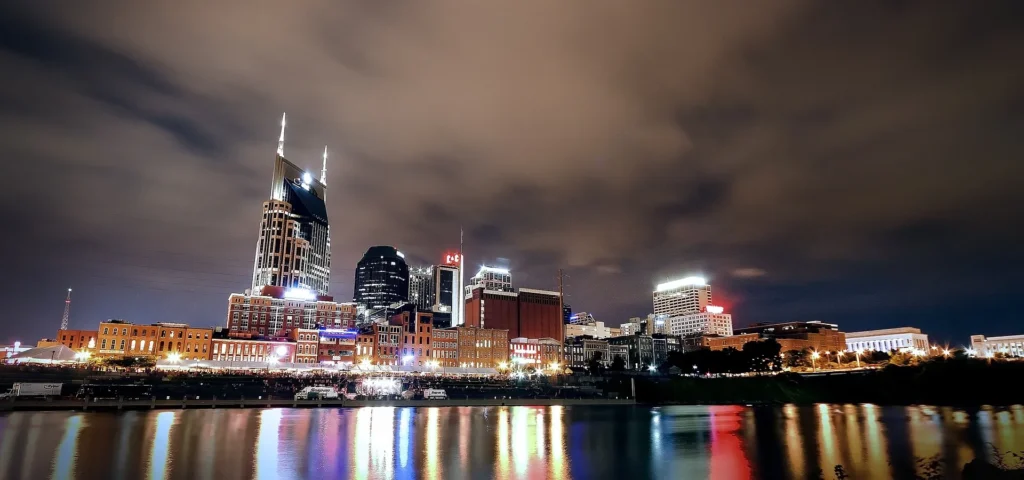
Nashville is constantly changing. New buildings rise, roads are redesigned, businesses move, and neighborhoods take on new identities. Yet underneath the modern city are communities whose streets, institutions, businesses, and residents helped shape Nashville long before today’s entertainment districts and rapid development.
A Nashville history tour becomes more meaningful when it looks beyond famous landmarks and considers the neighborhoods that influenced the city’s growth. Some historic communities remain recognizable today, while others were dramatically altered by highways, redevelopment, urban renewal, and economic change. Their stories help explain how Nashville became the city visitors see now.
Why Nashville’s Neighborhood History Matters
Cities are not built only by famous politicians, musicians, architects, and business leaders.
They are also shaped by families, workers, immigrants, entrepreneurs, churches, schools, neighborhood businesses, and community organizations.
Studying Nashville at the neighborhood level brings these stories into focus.
Neighborhoods Reveal Everyday History
A major landmark may commemorate one event or prominent person. A neighborhood can preserve generations of interconnected history.
Its streets can reveal where people lived and worked, where communities worshiped, where children attended school, and where residents created businesses and social institutions.
Even when much of the original neighborhood has disappeared, maps, photographs, surviving buildings, historical markers, and community memories can help reconstruct its story.
Black Nashville and the History of Jefferson Street
Jefferson Street is one of the most important places for understanding Nashville’s African American history.
The surrounding area developed into a major center of Black business, education, religion, entertainment, and community life. Its history is closely connected with institutions such as Fisk University, Tennessee State University, and Meharry Medical College.
Jefferson Street also became an important entertainment corridor.
Jefferson Street’s Music Legacy
Before Lower Broadway became the tourism and nightlife destination familiar to modern visitors, Jefferson Street had its own thriving music scene.
Clubs and venues along the corridor hosted influential performers and attracted audiences to a vibrant nightlife district.
Blues, jazz, rhythm and blues, and other musical traditions contributed to the area’s cultural importance.
This history broadens the meaning of Nashville’s “Music City” identity by demonstrating that the city’s musical development was never confined to a single genre or neighborhood.
Interstate Construction Changed Jefferson Street
One of the most consequential changes to the Jefferson Street community came with interstate highway construction.
The construction of Interstate 40 through North Nashville disrupted established residential and commercial areas.
Properties were removed, businesses were affected, and the physical connections that supported neighborhood life were altered.
Transportation Projects Can Reshape Communities
Highways are often discussed in terms of mobility and regional growth, but their construction can also have significant neighborhood consequences.
Homes, businesses, institutions, and established social networks can be displaced or divided when major transportation infrastructure cuts through an existing community.
Understanding this history helps explain why some Nashville neighborhoods look very different today from the communities that existed there generations ago.
Hell’s Half Acre and Black Business History
Historic Nashville included areas known by names that may be unfamiliar to today’s visitors.
One such area was commonly known as Hell’s Half Acre, a historically Black district near downtown that developed during the decades after the Civil War.
The area was associated with Black residents, businesses, boarding houses, churches, and other community institutions during an important period of Nashville’s post-emancipation history.
Reconstruction Changed Nashville
The years after the Civil War brought enormous change.
Formerly enslaved people established families, businesses, churches, schools, and communities while confronting discrimination, segregation, racial violence, and restrictions on economic and political opportunity.
Neighborhood histories from this period help visitors understand emancipation as the beginning of a difficult transformation rather than the end of the struggle for freedom and equality.
Black Bottom and Nashville’s Changing Urban Landscape
Black Bottom was another historically significant African American area in Nashville.
Like many urban neighborhoods across the United States, its physical landscape changed dramatically over time through redevelopment and other forces.
Today, visitors may pass through places connected with former communities without realizing that homes, businesses, and institutions once occupied the same ground.
A Neighborhood Can Disappear Without Its History Disappearing
When buildings are demolished and streets are changed, a neighborhood becomes harder to recognize.
That does not make its history unimportant.
Historic maps, newspapers, photographs, property records, oral histories, archaeology, and community research can help historians reconstruct places that no longer exist in their original form.
This is why a Nashville history tour should not rely exclusively on surviving buildings.
Sometimes the most important story is about what is no longer there.
Capitol Hill and the Capitol Hill Redevelopment Area
The area surrounding Tennessee’s State Capitol has changed substantially over generations.
Today, visitors naturally focus on government buildings, monuments, and the Capitol itself. Earlier landscapes around the hill included residential and commercial communities that looked very different from the modern government complex.
Redevelopment transformed significant portions of the area during the twentieth century.
Urban Renewal Changed American Cities
Nashville was not alone in using large-scale redevelopment to reshape central-city neighborhoods.
Across the United States, twentieth-century urban renewal projects frequently removed older housing and commercial districts in the name of modernization, government expansion, transportation, or redevelopment.
The consequences were significant for residents and businesses that occupied the affected areas.
Looking at Capitol Hill through this broader context helps visitors understand that today’s urban landscape resulted from deliberate planning decisions.
The Gulch Before the Modern Development Boom
Today, the Gulch is associated with hotels, restaurants, residences, businesses, nightlife, and modern development.
Its earlier identity was considerably different.
The area’s history is connected with Nashville’s railroad and industrial landscape, providing an example of how a neighborhood’s function can change dramatically over time.
Neighborhood Identities Are Not Permanent
Visitors sometimes assume that a neighborhood has always looked and functioned the way it does today.
The Gulch demonstrates why that assumption can be misleading.
Transportation patterns, industry, property values, redevelopment, and population growth can completely transform an urban district.
Learning what occupied an area previously makes the modern neighborhood easier to understand.
Germantown and Nashville’s Immigrant History
Germantown provides another perspective on Nashville’s development.
The historic neighborhood north of downtown is associated with German immigrants who contributed to Nashville’s commercial, cultural, and community life during the nineteenth century.
Its surviving architecture and street patterns provide valuable clues about an earlier Nashville.
Immigration Helped Build Nashville
Nashville’s history is sometimes simplified into a story centered only on Southern culture and country music.
Immigrant communities complicate that picture in important ways.
New residents brought languages, religious traditions, occupations, businesses, foods, skills, and cultural practices that became part of Nashville’s development.
Exploring Germantown can therefore open a larger conversation about migration and the people who contributed to the city’s growth.
Edgefield and the Development of East Nashville
Across the Cumberland River, historic Edgefield became one of the communities that contributed to the development of what visitors now broadly recognize as East Nashville.
The area became known for residential architecture, including homes that reflected the prosperity and design preferences of different periods.
Over time, transportation changes, disasters, development, and shifting economic conditions altered the neighborhood.
Historic Homes Reveal Changing Communities
Residential architecture can provide valuable evidence about neighborhood history.
The size of houses, lot patterns, construction materials, porches, decorative details, and street layouts can reveal how residents lived and how an area developed.
However, attractive architecture tells only part of the story.
Understanding who lived in those homes—and who worked in and around them—provides a fuller picture of the neighborhood.
East Nashville Has Experienced Repeated Change
East Nashville’s identity has never been static.
The area has experienced periods of development, economic change, natural disasters, reinvestment, and demographic shifts.
Today it is often discussed in terms of restaurants, local businesses, music, and residential appeal, but its history extends much further back.
Today’s Trendy Neighborhoods Have Older Stories
Modern visitors may encounter a neighborhood through its coffee shops, restaurants, boutiques, murals, or nightlife.
Those businesses represent only the current chapter.
Looking at earlier residents, architecture, industries, transportation, and community institutions can reveal layers of history hidden beneath the contemporary image.
Music Row Was Once Primarily Residential
Music Row is now synonymous with Nashville’s recording and music industries.
Yet the district did not begin as an entertainment-business center.
Many of the houses and structures in the area originated in a residential context before music-related businesses increasingly moved into the neighborhood during the twentieth century.
An Industry Can Transform a Neighborhood
Recording studios, publishing companies, record labels, management offices, and other music businesses gradually changed the area’s identity.
This transformation demonstrates how economic activity can reshape a neighborhood without necessarily erasing every element of its earlier architecture.
Visitors who look carefully can still recognize the residential origins of parts of Music Row.
Neighborhood Churches Preserved Community Connections
Churches have played major roles in many Nashville neighborhoods.
Beyond their religious functions, congregations often provided education, leadership, meeting spaces, mutual assistance, political organization, and social connections.
In historically Black communities especially, churches frequently became important institutions during and after Reconstruction and throughout the civil rights era.
Follow the Institutions When the Neighborhood Has Changed
When much of a historic neighborhood has disappeared, surviving institutions can provide important clues.
A church, school, cemetery, university, or longtime business may preserve connections to people who once lived throughout the surrounding area.
These institutions can act as anchors of historical memory even when the physical neighborhood has changed substantially.
Universities Helped Shape Nashville Neighborhoods
Nashville’s educational institutions have influenced the communities surrounding them.
Fisk University, Tennessee State University, Meharry Medical College, Vanderbilt University, Belmont University, and other institutions have attracted students, educators, professionals, businesses, and residents over generations.
Their influence extends beyond campus boundaries.
Education Is Part of Nashville’s Identity
Music may dominate Nashville’s international reputation, but higher education is another important part of the city’s history.
Historically Black colleges and universities have been especially important to Nashville’s African American intellectual, professional, and civil rights history.
Understanding these institutions provides context for neighborhoods that developed around them.
Nashville’s Civil Rights History Is Also Neighborhood History
The civil rights movement in Nashville involved students, churches, businesses, educational institutions, and downtown public spaces.
Participants in the Nashville sit-in movement challenged segregation through organized nonviolent protest, helping make the city an important location in the national civil rights movement.
These events did not occur in isolation from surrounding communities.
People Moved Between Campuses, Churches, and Downtown
Understanding the geography of the movement helps connect its history.
Students organized through educational and religious institutions before participating in demonstrations at segregated downtown businesses.
Viewing these locations as part of a connected urban landscape can make the story more tangible.
It also demonstrates why neighborhood history and major historical events frequently overlap.
Highways Changed More Than the Map
The construction of highways transformed American cities during the twentieth century, and Nashville was no exception.
New infrastructure improved regional automobile transportation, but some routes came at significant costs to established urban communities.
Buildings were demolished, residents relocated, businesses disrupted, and neighborhood connections altered.
Look for Physical Clues in Today’s Nashville
When traveling around the city, pay attention to highways, unusually divided streets, isolated historic buildings, and abrupt transitions between neighborhoods.
Modern infrastructure can sometimes reveal where earlier urban patterns were disrupted.
A knowledgeable guide can help explain why these transitions exist and what occupied the landscape before redevelopment.
Urban Renewal Left a Lasting Mark
Urban renewal is another important part of Nashville’s neighborhood story.
Redevelopment projects were often promoted as methods for addressing deteriorated buildings, modernizing infrastructure, or creating new civic and commercial development.
But these projects could also displace established communities.
Development Has Both Benefits and Costs
Cities inevitably change.
New housing, transportation, businesses, public spaces, and infrastructure can provide substantial benefits.
Historical analysis, however, also asks who benefited, who was displaced, what was demolished, and which communities had influence over the decisions.
Considering both sides produces a more complete understanding of Nashville’s development.
Why Some Nashville Neighborhoods Are “Forgotten”
Calling a neighborhood forgotten does not mean no one remembers it.
Former residents, descendants, historians, preservationists, churches, educational institutions, and community organizations may have worked for decades to preserve its history.
The neighborhood may seem forgotten primarily because its physical landscape has disappeared or because its story receives less attention in mainstream tourism.
Tourism Can Expand the Historical Narrative
Visitors often arrive in Nashville expecting stories about country music and famous performers.
Those stories matter, but they are only one part of the city.
Learning about African American neighborhoods, immigrant communities, working-class districts, educational institutions, urban renewal, and residential development creates a much richer picture of Nashville.
How to Explore Historic Nashville Neighborhoods Responsibly
Historic neighborhoods are not theme parks.
Many are living communities where people work, attend school, worship, own businesses, and raise families.
Visitors should approach them with respect.
Avoid treating private homes as attractions, blocking driveways, trespassing, or disrupting residents for photographs.
Support Local Businesses
One practical way to experience a neighborhood is to support businesses that operate there.
Restaurants, cafes, shops, galleries, and cultural organizations can provide opportunities to spend time in an area without treating the community simply as a sightseeing backdrop.
Whenever possible, learn about the neighborhood’s current identity as well as its history.
Use Historic Maps to See What Changed
Historic maps can dramatically improve your understanding of Nashville.
Compare an older map with the current street network and look for neighborhoods, rail lines, industrial areas, streets, and buildings that have changed or disappeared.
This exercise can make urban history much more tangible.
Compare Past and Present
When visiting a historic location, ask yourself:
- What stood here before?
- Who lived in this area?
- What businesses operated nearby?
- Which streets have changed?
- Did highways alter the neighborhood?
- What institutions survived?
- Which historic buildings remain?
- Why did the area change?
- Who benefited from redevelopment?
- Who was displaced?
These questions encourage a deeper form of sightseeing.
Why a Nashville History Tour Adds Context
Many traces of Nashville’s former neighborhoods are difficult to recognize without explanation.
A visitor may travel along a modern road without realizing that homes once occupied the area. A university campus may be connected with generations of community history. A surviving church may be one of the few visible links to a neighborhood transformed decades ago.
A Nashville history tour can connect these physical locations with the people and events behind them.
History Is Often Hidden in Ordinary Places
Not every important historic location has a museum or impressive monument.
Sometimes the most revealing places are ordinary street corners, older houses, institutional buildings, highway edges, or empty spaces.
The story becomes visible when you understand what happened there.
Frequently Asked Questions
What historic Nashville neighborhoods should visitors know about?
Areas connected with Nashville’s broader history include Jefferson Street and North Nashville, Germantown, historic Edgefield and East Nashville, Music Row, and communities affected by downtown redevelopment. Each reveals a different part of the city’s development.
Why is Jefferson Street important to Nashville history?
Jefferson Street became a major center of African American business, education, religion, community life, and entertainment. Its history is also connected with Nashville’s Black music heritage and the impact of interstate construction.
Did highway construction affect Nashville neighborhoods?
Yes. Twentieth-century highway construction altered parts of Nashville, including established communities in North Nashville. Buildings were removed and neighborhood connections were disrupted as new transportation infrastructure was constructed.
Why is Germantown historically significant?
Germantown is associated with Nashville’s nineteenth-century German immigrant community. Its history and surviving architecture help illustrate the role immigration played in the city’s development.
Was Music Row always a music-business district?
No. Much of the area had residential origins before recording studios, publishers, record labels, and other music businesses increasingly transformed its identity during the twentieth century.
Can you explore Nashville’s historic neighborhoods today?
Yes, although some historic communities have been substantially changed or no longer survive in their earlier physical form. Visitors can use historic sites, surviving institutions, architecture, museums, maps, and guided interpretation to understand them.
A Nashville history tour that explores neighborhood history reveals a city built by far more people and communities than its most famous landmarks suggest. African American communities, immigrants, educators, entrepreneurs, musicians, workers, religious institutions, and families all contributed to Nashville’s development.
Some of their neighborhoods remain visible, while others were fragmented or transformed by highways, redevelopment, and changing economic conditions. Learning where these communities existed—and why they changed—adds essential context to Nashville’s story and provides a deeper understanding of the modern city.