
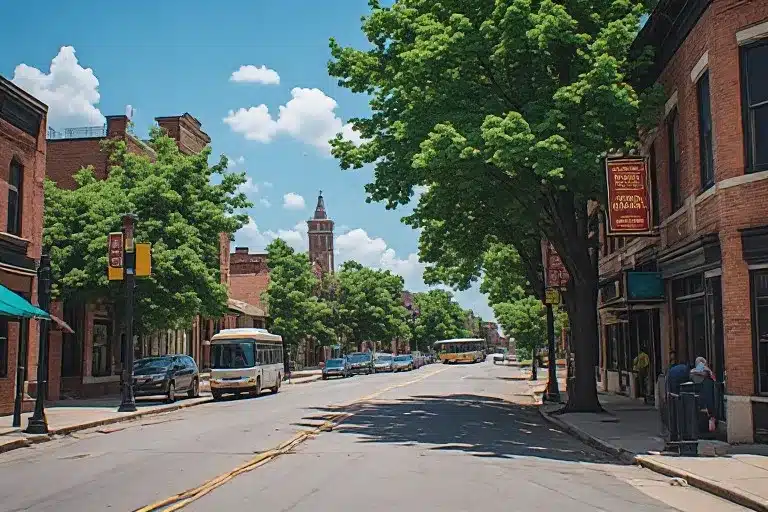
Nashville’s history is preserved not only in famous music venues, government buildings, and downtown landmarks but also in homes scattered throughout the city and surrounding communities. Some are well-known historic attractions, while others are easier to overlook among modern neighborhoods and rapidly changing streets.
A Nashville history tour can help visitors recognize these properties as more than attractive old houses. Historic homes can reveal how different generations lived, how neighborhoods developed, which architectural styles became popular, and how wealth, labor, politics, slavery, war, education, and social change shaped Nashville.
Why Nashville’s Historic Homes Matter
Historic homes provide a different perspective from public monuments.
Government buildings and museums often tell large institutional stories. Homes can bring history down to the scale of families, households, workers, and neighborhoods.
The rooms, materials, landscapes, and locations of older properties can provide clues about the people who occupied them and the society in which they lived.
A Historic Home Is More Than Its Architecture
Visitors naturally notice columns, porches, brickwork, windows, staircases, and decorative details.
Those features are important, but they are only one part of the story.
A complete history should also consider who owned the property, who built it, who worked there, who maintained it, and how the surrounding community changed over time.
The Hermitage
The Hermitage is one of the Nashville area’s best-known historic homes.
The property is closely associated with Andrew Jackson, the seventh president of the United States. It provides visitors with an opportunity to explore nineteenth-century political, agricultural, domestic, and social history.
Its significance extends beyond the life of a single president.
Understanding Andrew Jackson in Historical Context
Jackson was one of the most consequential political figures of his era, but his legacy is deeply contested.
His presidency included policies associated with the forced removal of Native American nations from their ancestral lands.
Understanding the Hermitage therefore requires more than examining Jackson’s political career. Visitors should consider the broader consequences of the policies and social systems connected with his life and era.
Slavery Is Essential to the Hermitage Story
The plantation depended on the labor of enslaved African Americans.
Their lives and work are fundamental to understanding how the property functioned and how wealth was created there.
When visiting historic plantation homes, examining the experiences of enslaved people provides essential context that architectural interpretation alone cannot supply.
Belle Meade
Belle Meade is another prominent historic property associated with Nashville’s nineteenth-century history.
The estate became widely known for thoroughbred horse breeding and developed into a significant agricultural operation.
Today, the property provides opportunities to examine architecture, family history, agriculture, slavery, and the economic systems that shaped the estate.
Look Beyond the Mansion
Large historic homes can naturally draw attention toward wealthy owners and elaborate interiors.
However, the mansion was only one component of a much larger operation.
Workers, including enslaved people before emancipation, supported the household, agricultural activities, maintenance, and economic life of the property.
Understanding those individuals creates a more complete historical picture.
Travellers Rest Historic House Museum
Travellers Rest is another important historic property in Nashville.
Its history reaches back to the early development of the region and later intersects with events surrounding the Civil War and the Battle of Nashville.
The property provides visitors with an opportunity to examine several historical periods through one location.
One House Can Represent Multiple Eras
Historic homes rarely belong to only one historical moment.
Families change, buildings are expanded, landscapes are modified, and major events alter how properties are used.
Travellers Rest demonstrates why visitors should think of historic homes as places that accumulated history over generations.
Belmont Mansion
Belmont Mansion offers a different perspective on nineteenth-century Nashville.
The property is closely associated with Adelicia Acklen, one of the wealthiest women in the region during her lifetime.
Its architecture and interiors provide insight into wealth, design, travel, collecting, and domestic life among Nashville’s elite.
Wealth Has a Larger Historical Context
Elaborate historic homes can easily become celebrations of luxury.
A deeper historical interpretation asks where the wealth came from and which economic systems supported it.
In nineteenth-century Tennessee, slavery was deeply connected with wealth creation and agricultural production.
Understanding this context helps visitors interpret historic estates more critically.
Two Rivers Mansion
Two Rivers Mansion is another historic property connected with Nashville’s development.
Located near the Stones River, the property provides visitors with a glimpse into nineteenth-century architecture and the history of the families associated with the estate.
Its setting also demonstrates how historic Nashville extended well beyond the modern downtown core.
Historic Nashville Was Geographically Broader Than Downtown
Visitors sometimes assume that Nashville history is concentrated around Broadway and the Cumberland River.
Historic homes show otherwise.
Families established farms, estates, and residences throughout areas that are now integrated into metropolitan Nashville.
Exploring these properties can help visitors understand how the region developed beyond its original urban center.
Historic Edgefield Homes
East Nashville’s historic Edgefield area contains residential architecture that provides another perspective on the city’s past.
Rather than focusing on a single mansion, visitors can observe streets where groups of older homes help preserve the character of earlier residential development.
Streetscapes Can Be as Important as Individual Houses
A single historic house provides information about one property.
An entire streetscape can reveal neighborhood planning, lot sizes, architectural preferences, economic conditions, and development patterns.
Walking through historic residential areas can therefore provide valuable context even when individual homes are privately owned and unavailable for interior visits.
Germantown’s Historic Residential Architecture
Germantown is another Nashville neighborhood where surviving architecture helps tell the story of earlier communities.
The neighborhood is associated with German immigrants who contributed to Nashville’s development during the nineteenth century.
Historic houses and streets can provide clues about the people who established homes and businesses there.
Immigration Is Part of Nashville’s History
Nashville’s past cannot be explained exclusively through Southern political history or country music.
Immigrant communities contributed skills, businesses, religious traditions, foods, cultural practices, and institutions to the city.
Historic residential neighborhoods help make these contributions visible.
Music Row’s Former Homes
Music Row presents an unusual form of historic residential preservation.
Many buildings in the district originated as homes before the growth of Nashville’s recording industry transformed the neighborhood.
Over time, former residences became studios, publishing offices, record-company facilities, and other music businesses.
A House May Hold Music History
The exterior of a former residence may not immediately reveal what happened inside after its conversion.
Important songs may have been written, recorded, published, or promoted within buildings that still resemble ordinary houses.
This is one reason local historical context can be particularly useful when exploring Music Row.
Historic Homes and the Civil War
Nashville’s Civil War history affected households throughout the city and surrounding region.
Union occupation beginning in 1862 transformed daily life as military facilities, hospitals, fortifications, troops, refugees, and logistical operations became part of the local landscape.
Historic homes can provide a more personal way to examine this period.
War Affected Civilians as Well as Soldiers
Military history often emphasizes battles, generals, and troop movements.
Homes provide opportunities to consider civilian experiences.
Families faced shortages, occupation, political divisions, displacement, uncertainty, and other disruptions.
Enslaved people experienced the conflict from a very different position as war destabilized slavery and created opportunities for self-emancipation.
Historic Homes and African American History
The history of Nashville’s older homes must include the experiences of African Americans.
Some properties were built and maintained through enslaved labor. Others became connected with Black professionals, educators, entrepreneurs, religious leaders, and community builders after emancipation.
Ask Who Worked in the House
When visiting a historic home, consider more than the owner.
Ask:
- Who constructed the property?
- Who prepared food?
- Who cleaned and maintained the rooms?
- Who cared for children?
- Who worked the surrounding land?
- Were enslaved people held there?
- What happened to workers after emancipation?
- How did labor arrangements change over time?
These questions can reveal histories that traditional house tours sometimes minimized.
Architecture Can Help Date a Nashville Home
Historic houses often contain architectural features associated with particular periods and design traditions.
Visitors do not need professional training to begin recognizing these differences.
Look at the overall shape of the building before examining smaller details.
Architectural Details to Notice
Pay attention to:
- Porches
- Columns
- Window proportions
- Rooflines
- Brickwork
- Chimneys
- Decorative trim
- Doors
- Symmetry
- Building materials
- Additions
- Outbuildings
- Landscaping
- Property boundaries
These features can provide clues about when a home was constructed and how it changed.
Additions Can Reveal How Families Changed a Property
Historic houses were not necessarily built exactly as visitors see them today.
Owners frequently expanded or altered properties as families grew, finances changed, technology developed, or architectural preferences evolved.
An addition can therefore be historically significant rather than simply a later modification.
Look for Changes in Materials
Differences in brick, wood, rooflines, windows, foundations, and construction techniques can reveal where buildings were expanded.
Guides and preservation professionals can help explain these changes and identify which portions of a property belong to different periods.
This makes the building itself a historical document.
Outbuildings Can Be Historically Important
Visitors often concentrate on the main house, but smaller structures can provide essential information.
Kitchens, smokehouses, barns, cabins, workshops, carriage houses, slave quarters, and other outbuildings reveal how a property actually functioned.
The Main House Tells Only Part of the Story
Large residences often represent the lives and priorities of property owners.
Outbuildings may provide stronger evidence about labor, food production, transportation, agriculture, and the experiences of workers.
Exploring the entire property creates a more balanced understanding of historic domestic life.
Gardens and Landscapes Are Part of the History
The land surrounding a historic home should not be treated merely as scenery.
Driveways, gardens, agricultural areas, fences, trees, paths, and property boundaries can all reveal how a site was organized.
Landscapes can also change substantially over generations.
Imagine the Property Before Modern Nashville
Modern roads, neighborhoods, commercial development, and utilities can make it difficult to visualize earlier landscapes.
When visiting a historic home, consider what surrounded the property when it was built.
Was it rural?
Was agriculture nearby?
How close was the nearest settlement?
Which roads existed?
These questions help place the house within its original environment.
Preservation Saved Many Nashville Homes
Rapid urban growth can place historic residential properties under development pressure.
Some Nashville homes survive because owners, preservation organizations, communities, universities, or government agencies recognized their historical value.
Others have been lost.
Preservation Requires Decisions
Not every old building can or will be preserved.
Communities must consider historical significance, architectural value, structural condition, development needs, ownership, funding, and potential new uses.
These decisions influence which parts of Nashville’s built history remain visible to future generations.
Adaptive Reuse Can Protect Historic Houses
Preservation does not always require turning an old home into a museum.
Some historic residences can be adapted for offices, businesses, educational uses, event spaces, or other purposes while retaining important architectural features.
Music Row provides numerous examples of residential buildings that acquired commercial functions.
New Uses Can Extend a Building’s Life
A useful building is often easier to maintain than an abandoned one.
Sensitive adaptive reuse can provide economic value while preserving architecture.
However, renovations should respect historically significant features when preservation is a priority.
The balance between preservation and modern use is an ongoing challenge in a rapidly developing city such as Nashville.
Private Historic Homes Should Be Respected
Not every beautiful old house is a public attraction.
Many historic Nashville homes remain private residences.
Visitors should never enter private property, walk onto lawns, block driveways, peer through windows, or disturb residents for photographs.
View Private Architecture From Public Areas
If a historic home is privately occupied, enjoy it from a public sidewalk or other legal public space.
Follow neighborhood parking regulations and avoid creating congestion.
Responsible sightseeing protects residents while allowing visitors to appreciate historic architecture.
Check Public Access Before Visiting
Historic-home operations can change.
Hours, admission prices, tours, exhibitions, accessibility, parking, and photography policies may vary by property and season.
Always confirm current information directly with the organization managing the site before traveling.
Some Homes Require Guided Tours
Certain historic properties limit interior access to scheduled guided tours.
Others may offer self-guided grounds access, exhibitions, special events, or seasonal programs.
Planning ahead can prevent visitors from arriving when a property is unavailable.
Combine Historic Homes With Neighborhood Exploration
Historic houses become more meaningful when visitors understand the communities surrounding them.
Instead of driving directly to a property and leaving immediately afterward, explore the nearby area when appropriate.
Look at streets, churches, businesses, parks, and other surviving architecture.
Understand the Home in Its Original Context
Ask why the property was built in that particular location.
Was it close to transportation?
Was it originally rural?
Was it associated with an agricultural estate?
Did a neighborhood later grow around it?
Understanding location can reveal as much about a historic home as the building itself.
Use a Nashville History Tour to Connect the Properties
Nashville’s historic homes are spread across a large geographic area.
Some are near downtown, while others are located in neighborhoods or farther from the city’s central tourist district.
A Nashville history tour can help connect residential architecture with broader stories involving politics, music, the Civil War, slavery, immigration, business, and neighborhood development.
Stories Make Historic Houses More Meaningful
An old house without context may simply look attractive.
Once visitors understand who lived there, who worked there, what events occurred there, and how the surrounding community changed, the building becomes much more meaningful.
This connection between place and people is one of the strongest reasons to explore historic homes.
Frequently Asked Questions
What historic homes can visitors see around Nashville?
Notable properties include the Hermitage, Belle Meade, Travellers Rest, Belmont Mansion, and Two Rivers Mansion. Nashville also contains historic residential architecture in neighborhoods such as Germantown and East Nashville.
Are all historic Nashville homes open to the public?
No. Some operate as museums or historic attractions, while many others remain private residences. Always verify current access before visiting and respect private property.
Which Nashville historic home is associated with Andrew Jackson?
The Hermitage is closely associated with Andrew Jackson, the seventh president of the United States. The property’s history also includes the enslaved people whose labor supported the plantation.
Are there historic homes near Downtown Nashville?
Historic residential properties and former homes can be found in several areas around Nashville, including neighborhoods and districts relatively close to downtown. Music Row also contains former residences later adapted for music-industry uses.
Why are Nashville’s historic homes important?
Historic homes provide evidence about architecture, family life, labor, slavery, wealth, neighborhood development, immigration, politics, and social change. They help visitors examine history at a more personal scale.
Can I photograph historic homes in Nashville?
Photography policies vary at publicly operated historic properties. Private homes should only be photographed from legal public areas without trespassing or disturbing residents.
Nashville’s historic homes preserve stories that cannot always be found in its major downtown attractions. Mansions, former plantations, neighborhood residences, and houses later converted for new uses reveal how generations of Nashvillians lived and how the city expanded around them.
Exploring these properties through a Nashville history tour can connect architecture with the people whose lives shaped each place. By considering owners alongside workers, enslaved people, families, communities, and later occupants, visitors can develop a more complete understanding of Nashville’s past.