
A Nashville van tour can be an efficient way to understand Music City because many of Nashville’s most interesting neighborhoods, landmarks, and music-related areas are spread beyond a single downtown district. Instead of spending your sightseeing time repeatedly navigating between locations, a guided vehicle experience can connect several parts of the city within one organized route.
For first-time visitors, knowing the areas commonly associated with Nashville sightseeing can also make the rest of a trip easier to plan. Downtown, Music Row, 12 South, the State Capitol area, and other districts each reveal something different about the city. Understanding how these places fit together can help you decide what you want to explore more closely afterward.
Why Nashville Van Tour Routes Matter
A sightseeing route determines much of what you will experience during a guided vehicle tour.
Two tours of similar length can feel completely different depending on the neighborhoods they cover, the stories told along the way, and whether the route concentrates on major attractions or provides a broader look at Nashville.
A well-planned route should do more than move visitors between famous landmarks. It should help explain how Nashville’s history, music, neighborhoods, architecture, and modern culture connect.
Nashville Is Bigger Than Lower Broadway
Lower Broadway is one of Nashville’s best-known visitor destinations, but it represents only one part of the city.
Travel beyond downtown and the atmosphere changes quickly. Music-industry districts, residential neighborhoods, historic areas, commercial streets, and cultural destinations each contribute to Nashville’s identity.
A vehicle-based tour makes it possible to connect several of these areas without requiring visitors to walk the entire distance or arrange separate transportation for each one.
Downtown Nashville and Lower Broadway
Downtown is a natural starting point for understanding Nashville.
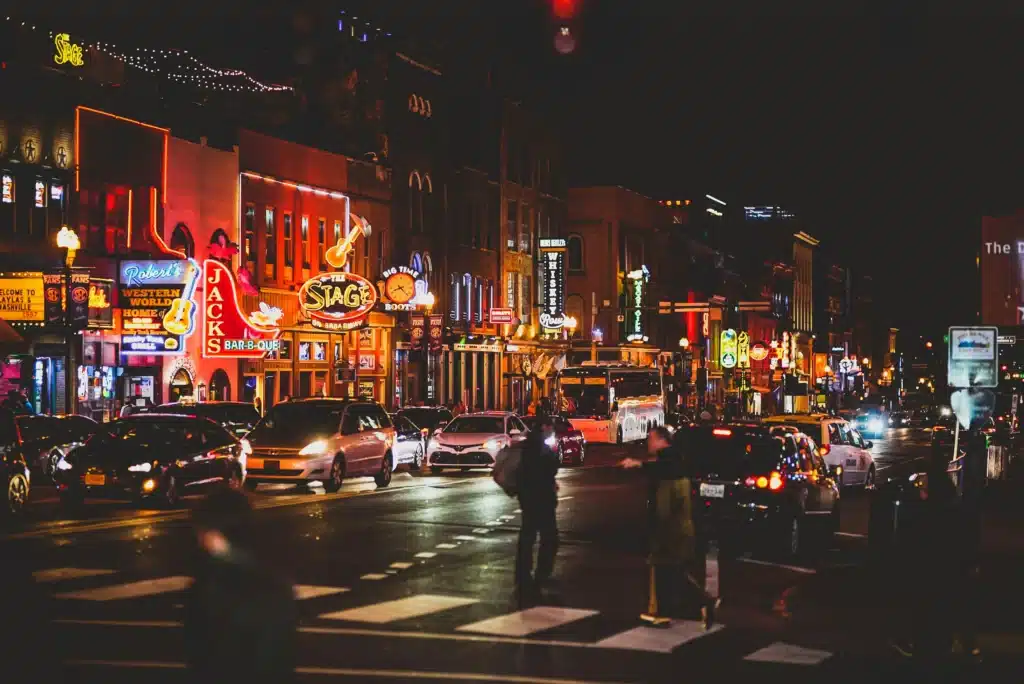
Lower Broadway is known for live music, neon signs, entertainment venues, restaurants, and heavy pedestrian activity. The surrounding downtown area also contains historic buildings, cultural attractions, government landmarks, and places connected with Nashville’s growth.
A Nashville van tour that includes downtown can provide useful orientation for visitors who plan to return later on foot.
Why Downtown Is Important to the Route
Downtown helps visitors understand the relationship between Nashville’s historical identity and its modern tourism and entertainment industries.
Rather than viewing Broadway only as a nightlife destination, a guided experience can add context about the streets, buildings, people, and industries that influenced the area.
Once you understand the layout, returning independently for restaurants, museums, music, or additional sightseeing becomes easier.
Music Row
Music Row is an essential area for visitors interested in why Nashville became known around the world as Music City.
The district has long been associated with recording, publishing, songwriting, management, and other parts of the music business.
Unlike Lower Broadway, much of Music Row’s importance is not immediately obvious from the street. Many significant locations can resemble ordinary offices or commercial buildings without historical context.
Why a Guide Adds Value on Music Row
A knowledgeable guide can explain the people, businesses, and developments connected with the area while you are actually seeing it.
This is one of the situations where guided sightseeing can provide substantially more context than simply driving through the neighborhood independently.
Music Row also helps visitors understand that Nashville’s music identity extends well beyond its live-performance venues.
Music Circle
Music Circle adds another dimension to Nashville’s music-industry landscape.
Visitors focused entirely on famous downtown venues may not initially recognize the importance of areas connected with the business and institutional side of Nashville’s musical development.
Including areas such as Music Circle in a broader sightseeing route can help connect Nashville’s entertainment image with the infrastructure behind Music City.
Look Beyond the Famous Music Attractions
Some of Nashville’s most meaningful music-related locations are not conventional tourist attractions.
They may not have large signs, extensive exhibits, or obvious photo opportunities.
Their value comes from understanding what happened there and how those places contributed to Nashville’s music industry. This is where local storytelling becomes an important part of the tour experience.
The Tennessee State Capitol Area
Nashville is not only Music City; it is also Tennessee’s state capital.
The Tennessee State Capitol and surrounding civic areas provide a different perspective on the city’s history and identity.
Government buildings, historic architecture, public spaces, and nearby landmarks help demonstrate Nashville’s political and civic importance within Tennessee.
Why History Travelers Should Pay Attention
Visitors primarily attracted by Nashville’s music scene can easily overlook its government and civic history.
Including the Capitol area in a sightseeing route creates a broader understanding of Nashville’s development.
It also introduces an area that history and architecture enthusiasts may want to revisit independently.
Printers Alley
Printers Alley provides a more intimate look at downtown Nashville’s history and entertainment culture.
Its narrow scale contrasts sharply with the larger streets and modern developments nearby, making it an interesting part of the downtown landscape.
Historically significant areas like this can reveal stories that are easy to miss when visitors focus only on major attractions.
Small Places Can Tell Big Stories
A sightseeing route does not need to include only large landmarks.
Alleys, individual buildings, older commercial areas, and smaller historic spaces can sometimes provide the strongest connections to Nashville’s past.
A guide can help visitors understand why these places matter instead of simply passing them without context.
12 South
12 South provides a noticeably different experience from downtown Nashville.
The neighborhood combines residential streets with restaurants, shops, murals, and local businesses, giving visitors an opportunity to see another side of the city.
For travelers who want to understand Nashville beyond its entertainment districts, neighborhoods like 12 South can add useful variety to a sightseeing route.
A Neighborhood Worth Revisiting
A van tour can introduce you to 12 South, but the neighborhood may also be worth exploring independently afterward.
Visitors interested in shopping, dining, public art, photography, or simply walking through a different part of Nashville may want to return when they have more time.
This is one of the benefits of taking a guided city overview early in your trip: you discover places that can shape the rest of your itinerary.
The Cumberland River and Nashville’s Geography
The Cumberland River is an important part of Nashville’s physical landscape.
Seeing downtown in relation to the river can help visitors better understand the city’s geography and development.
A route that provides different perspectives of the river and skyline can also offer a visual break from street-level sightseeing.
See Downtown From More Than One Perspective
When visitors spend most of their time inside the downtown core, it can be difficult to understand the shape of the city.
Viewing the skyline from another area provides useful geographic context and can create memorable photography opportunities.
It also demonstrates how Nashville extends outward from the familiar downtown entertainment district.
Nissan Stadium and the East Side of the River
The area around Nissan Stadium provides another perspective on Nashville’s relationship with the Cumberland River and downtown.
Passing through or viewing this part of the city can help visitors understand how major venues and neighborhoods connect across the river.
It can also provide a useful geographic reference point for travelers attending an event during their visit.
Major Events Can Affect Tour Routes
Sporting events, concerts, festivals, construction, and road closures can change traffic patterns around major Nashville venues.
For that reason, sightseeing routes sometimes need to be adjusted.
Visitors should view published route highlights as an indication of the overall experience rather than assume that every street or landmark will always be approached in exactly the same way.
Nashville’s Historic Architecture
Some of the most interesting parts of a Nashville van tour are not individual attractions but the buildings and streets encountered between major destinations.
Historic churches, commercial buildings, civic architecture, older residential properties, and modern development can all reveal how Nashville has changed.
Pay Attention Between the Major Stops
Visitors naturally focus on famous landmarks, but the journey between them can be equally informative.
Look at building materials, street layouts, architectural styles, and the transition between older and newer development.
A knowledgeable guide can point out details that would otherwise be easy to overlook from a moving vehicle.
Neighborhoods Beyond the Tourist Core
One advantage of a vehicle-based tour is the ability to move beyond the areas most visitors can comfortably cover on foot.
Nashville’s neighborhoods have different histories, architecture, businesses, and cultural identities.
Even a brief introduction can help visitors recognize that Music City is not one uniform destination.
Use the Tour to Find Areas You Want to Explore
You do not need to explore every neighborhood thoroughly during the tour itself.
Instead, think of the route as an introduction.
If an area interests you, note its name and return later. This approach combines the efficiency of guided sightseeing with the freedom of independent exploration.
How Much Can You See on a Nashville Van Tour?
The amount you can see depends on tour duration, traffic, route design, stops, and the amount of commentary provided.
More locations do not necessarily mean a better tour.
A route that races through a long list of landmarks may provide less value than one that gives visitors enough context to understand what they are seeing.
Quality of Context Matters
A sightseeing tour should not simply become a checklist of buildings.
The strongest experiences connect locations with stories about Nashville’s people, history, music, neighborhoods, and development.
When comparing tours, consider both where the vehicle goes and what you will learn along the way.
Van Tour vs Walking Tour Routes
Walking and vehicle-based tours cover Nashville differently.
A walking tour is generally better suited to exploring a concentrated area in detail. A van tour can connect locations spread across a much larger geographic area.
When a Van Tour Makes Sense
A van tour may be particularly useful when you:
- Are visiting Nashville for the first time
- Have limited sightseeing time
- Want to see several neighborhoods
- Prefer less continuous walking
- Want transportation combined with local guidance
- Are traveling with family or a small group
- Want an overview before exploring independently
When Walking Makes Sense
Walking may be preferable when you already know which neighborhood you want to explore and want to examine its architecture, streets, businesses, and landmarks more closely.
For many visitors, the best itinerary includes both approaches.
What to Look for When Comparing Nashville Van Tour Routes
Before booking, read the tour description carefully.
Do not choose solely according to the number of landmarks advertised.
Consider whether the overall route matches what you want to learn about Nashville.
Useful factors to compare include:
- Neighborhoods covered
- Major landmarks
- Tour duration
- Vehicle size
- Group size
- Amount of walking
- Stops or photo opportunities
- Historical content
- Music-related content
- Guide interaction
- Accessibility
- Climate control
- Meeting location
- Cancellation policies
These details provide a better picture of the actual experience than the tour name alone.
Nashville Experience Tours’ Van Tour Format
Nashville Experience Tours offers a locally guided sightseeing experience using an enclosed, air-conditioned 12-passenger shuttle.
The experience is designed to introduce visitors to multiple parts of Music City while providing local stories and context along the way.
Published highlights associated with the experience include areas and landmarks such as 12 South, Lower Broadway, Nissan Stadium, Music Row, Music Circle, Printers Alley, the State Capitol area, and other Nashville sights.
Actual routing can be influenced by traffic, construction, events, road closures, and other conditions, so visitors should review current tour information when booking.
Take Your Van Tour Early in Your Nashville Trip
For first-time visitors, one of the best times to take a guided sightseeing tour is near the beginning of the trip.
The experience can help you understand Nashville’s layout before you begin exploring independently.
It can also introduce neighborhoods and attractions that were not part of your original itinerary.
Turn the Route Into a Personal Itinerary
Pay attention to the places that interest you most during the tour.
Perhaps you want to return to Music Row to explore music history more deeply. Maybe 12 South catches your attention for shopping and dining. You might decide to spend additional time downtown examining historic architecture.
The tour becomes more valuable when you use what you learn to improve the rest of your visit.
Frequently Asked Questions
What areas can you see on a Nashville van tour?
Routes vary by operator and tour. Depending on the experience, sightseeing may include downtown, music-related districts, historic areas, neighborhoods, civic landmarks, and locations outside the immediate Broadway area.
Is a Nashville van tour good for first-time visitors?
Yes. A vehicle-based tour can help first-time visitors understand Nashville’s geography, see several areas efficiently, and identify neighborhoods or landmarks they want to revisit independently.
How is a Nashville van tour different from a bus tour?
The primary difference is usually vehicle and group size, but the route, guiding style, duration, stops, and overall experience may also differ. Compare the complete tour details before booking.
Does a Nashville van tour include Music Row?
Some do, but routes differ between operators. If Music Row is important to you, verify that it is included in the current tour description before booking.
Are Nashville van tour routes always the same?
Not necessarily. Traffic, road closures, construction, concerts, sporting events, festivals, and other conditions can require route adjustments.
Is a van tour better than driving around Nashville yourself?
It depends on what you want. Driving yourself provides flexibility, while a guided van tour combines transportation with an organized route and local commentary. Visitors who want context as they explore may prefer the guided format.
A Nashville van tour can provide more than transportation between famous attractions. A thoughtfully designed route can connect downtown, music districts, neighborhoods, historic areas, civic landmarks, and other parts of Nashville while explaining how they contribute to the city’s identity.
For first-time visitors especially, the most useful route is often one that provides a broad introduction rather than attempting to cover everything. Use the experience to understand Music City, identify the places that interest you most, and then return to those neighborhoods and landmarks at your own pace.